
Research project · D-A-CH Transport Infrastructure Research 2024
Electrification of Large Road Construction Sites
VoltaVia investigated how the electrification of large road construction sites can be implemented technically and organisationally on the basis of renewable energy sources, which requirements this creates for tendering and procurement, and which effects on construction processes, economic viability and the industry are to be expected.
Final report published · Pilot project wanted

01What it is about
What are we investigating?
Three fields that belong together: the machines, their on-site energy supply and the procurement that brings both into practice.
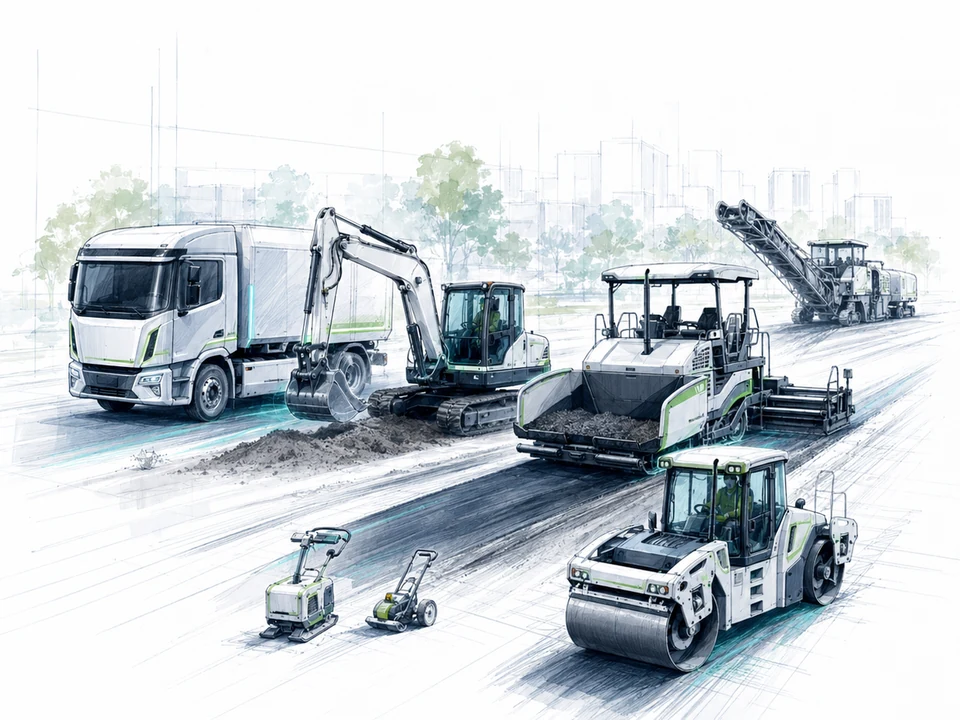
Construction machinery & site vehicles
Which road construction machines – from transport vehicles to asphalt pavers, rollers and auxiliary equipment – are available in electric versions today, and where are the limits?
Energy supply
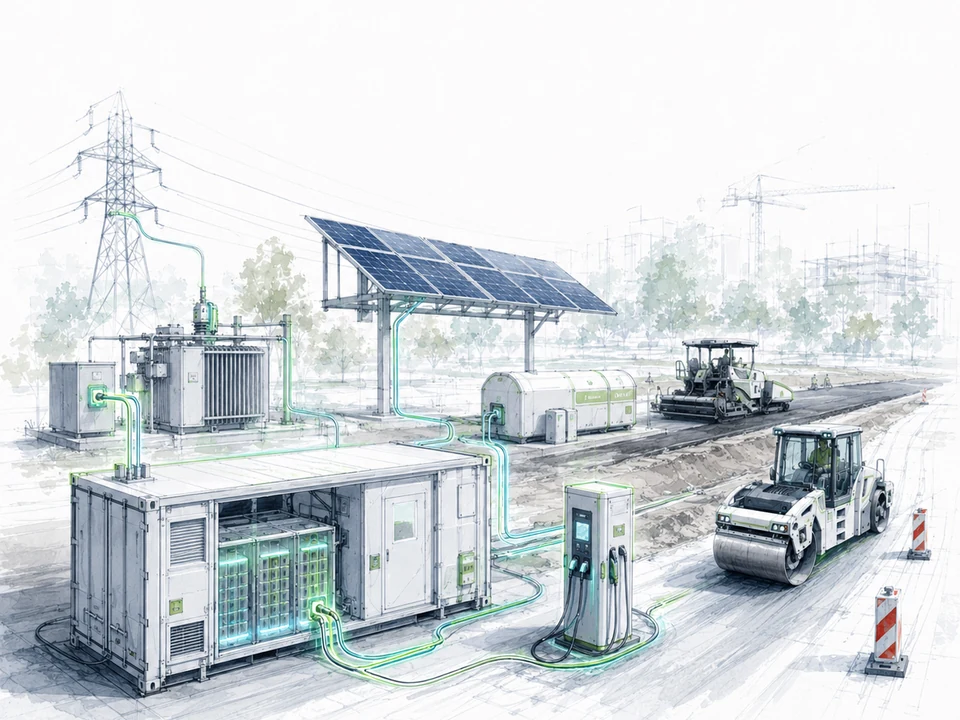
How can power and energy be provided on site – via grid connection, mobile storage or renewable sources – and how does charging fit into the construction workflow?
Tendering & procurement
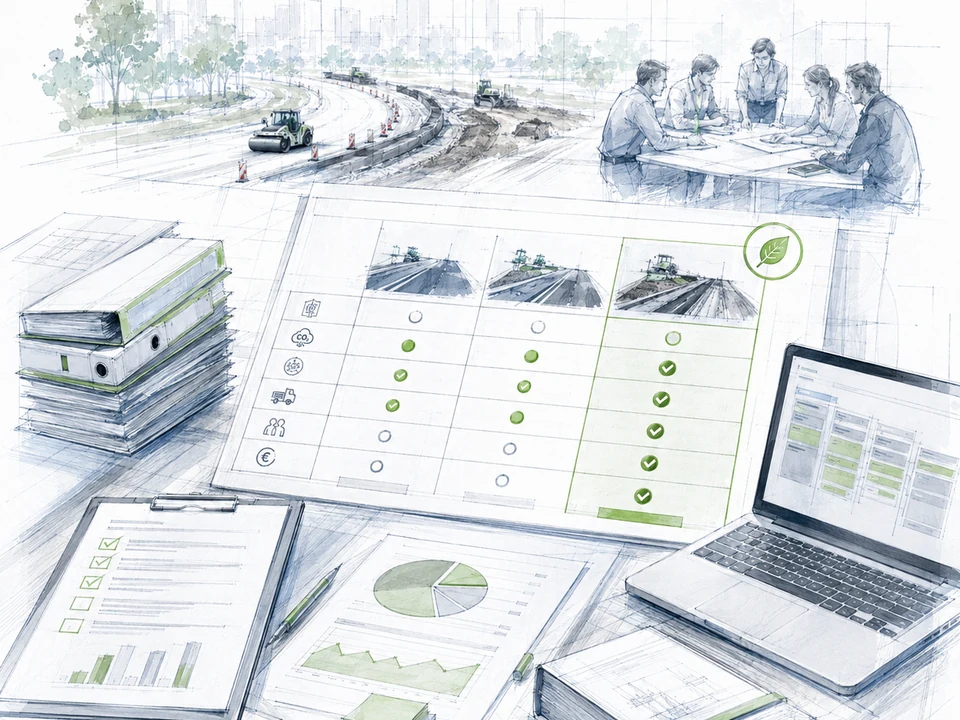
How can public clients evaluate lower-emission construction methods in a technology-neutral way and create incentives for electrification today?
How do the three fields interlock?
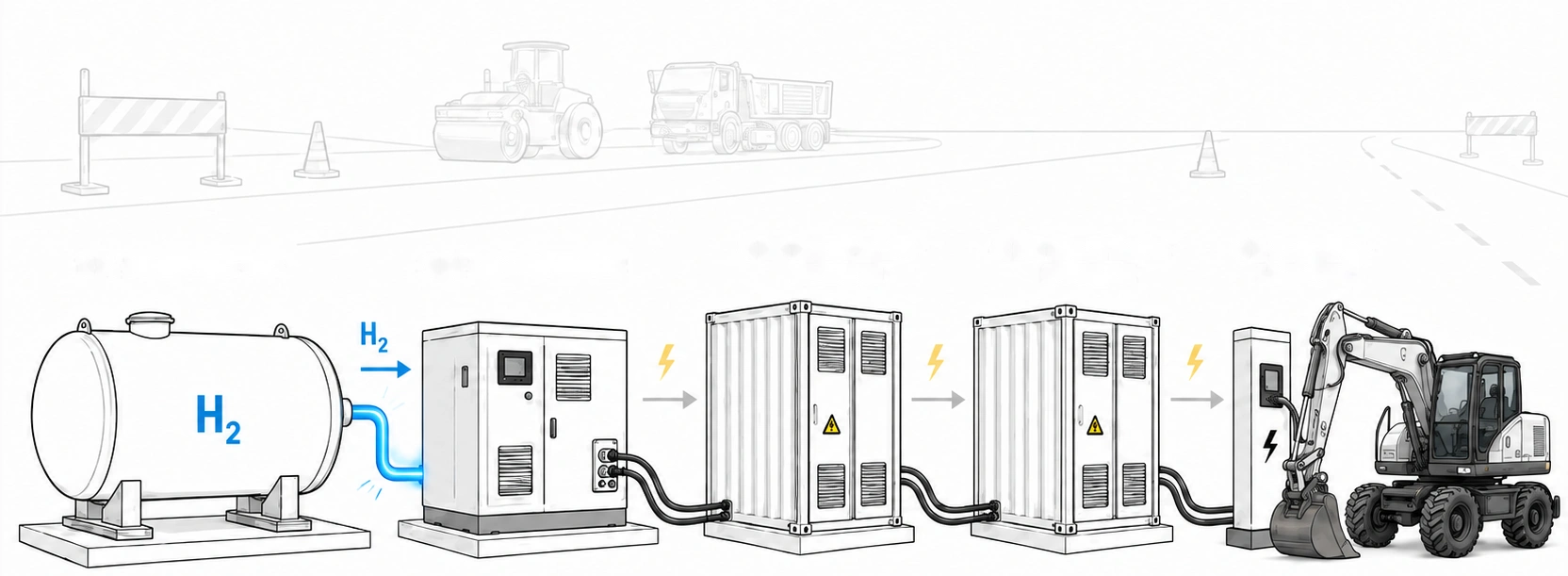
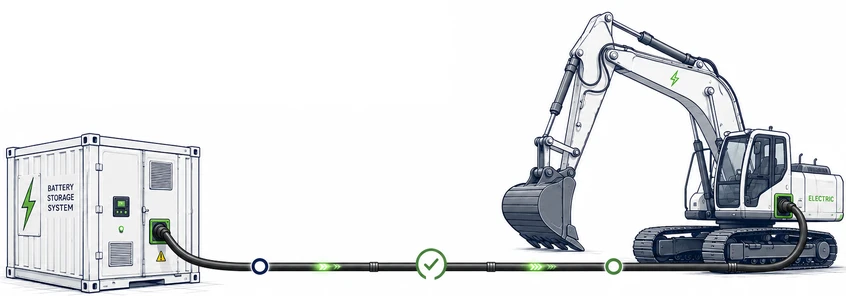
VoltaVia treats construction machinery, energy supply and procurement as one interconnected system. The technical supply chain runs from the energy source through generation, storage and charging to the machine. Tendering and procurement provide the framework for deliberately considering and incentivising suitable machinery and supply concepts.
02Results
What has VoltaVia shown?
Under the conditions examined, extensive electrification of large road construction sites is already technically feasible today. The main hurdles are not the machines themselves but the on-site provision of energy and power, integration into the construction process and the so far low, hard-to-plan demand.
Technically feasible
Electrified models exist for 86 % of the machine classes examined. Limits remain mainly for specialised and particularly power-intensive machines.
Organisationally plannable
Machine and supply concepts show how energy and power can be provided for a specific project and how charging fits into the construction process – using electricity, hydrogen or HVO as energy carriers.
Implementable in procurement
The Electrification Index assesses machine concepts in a technology-neutral way and translates the degree of electrification into an award advantage. Conventional solutions remain admissible.
The procurement mechanism in three steps
Assess the machine concept
The bidder enters the planned machine deployment in a form – vehicle type, relevance in the construction process, drive technology and energy source.
Determine the degree of electrification
The entries are used to calculate the Electrification Index – a figure between 0 and 1. The lower the emissions of the machine concept, the higher the value.
Apply the award advantage
The index reduces the evaluation price by up to a share defined by the client. Payment is still based on the bid calculation.
Final report and materials
VoltaVia final report
PDF · 153 pages · 8 MB · German
The complete results report with machine and supply concepts, Electrification Index, procurement recommendation and impact analysis.
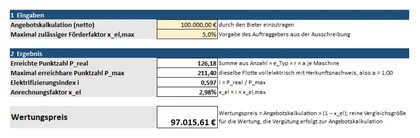
Form & evaluation logic
Presented on request · Excel form, factor table, incentive scheme
We present the Excel form for bidder entries, the factor table and the award and incentive scheme to you and explain how they are applied. You then implement them in your own procurement procedure – with our support if desired.
03Target groups
What does this mean for practice?
The results address three key groups of actors who jointly bring electrification into practice: public clients, construction companies and construction machinery manufacturers.
VoltaVia shows how lower-emission machinery and supply concepts can be considered in tendering and procurement in a technology-neutral way, and how suitable incentives for their use can be set.
- How can lower-emission machinery and supply concepts be considered in tendering and procurement in a technology-neutral way?
- Which requirements, evaluation criteria and evidence need to be defined as early as tender preparation?
- How can suitable incentives be set without unnecessarily restricting competition?
VoltaVia shows which electrified machines are available today and how energy supply, charging and logistics can be integrated into existing construction processes.
- Which construction machines and vehicles are already available in electrified form today, and for which applications are they suitable?
- How can the required energy be provided on site and charging be integrated into the construction process?
- What effects does electrification have on logistics, construction workflow and productivity?
VoltaVia shows in which machine classes electrified solutions are already available, where development is still needed and which requirements arise from use in road construction.
- For which machine classes are electrified solutions already available, and where are there still gaps?
- Which performance, application and operating-time requirements does road construction place on electrified machines?
- How can tendering and procurement help create reliable demand for lower-emission technologies?
04Pilot project
The solution is ready – now it needs a real project
VoltaVia brings lower-emission construction sites into practice. We are looking for a road construction or rehabilitation project in which the procurement mechanism is applied in a real tender for the first time – accompanied by the project team.
Select a project
Identify a suitable road construction or rehabilitation project
Extend the tender
Integrate the evaluation logic and incentive mechanism into the tender
Implement
Evaluate bids, document implementation and transfer the findings
What we need
- A potentially suitable road construction project
- An interested project manager as contact person
- The opportunity to help shape the tender together
What VoltaVia contributes
- Form, factor table and evaluation logic
- Proposal for the award and incentive scheme
- Support with evaluation, documentation and, if desired, scientific monitoring
What you gain
- Practical experience with lower-emission construction methods
- A basis for decisions on use in further projects
- The option of further development through project support or follow-up research
Lower-emission bids receive an award advantage – competition remains open.
05Partners
Who is behind it?
Practice, science and coordination in one joint project team – funded by three ministries within the D-A-CH cooperation and managed by the FFG.



Germany, Austria, Switzerland
D-A-CH Cooperation Transport Infrastructure Research 2024
A project funded under the D-A-CH Cooperation Transport Infrastructure Research 2024 by the German Federal Ministry of Transport (BMV), the Austrian Federal Ministry for Innovation, Mobility and Infrastructure (BMIMI) and the Swiss Federal Roads Office (ASTRA). Programme management: Austrian Research Promotion Agency (FFG).
06Timeline
Where does the project stand?
The project is complete and the final report has been published – the focus is now on application in practice.
07Latest from the project
News
- 10/2026Pilot project wantedVoltaVia is looking for a road construction or rehabilitation project in which the procurement mechanism is applied for the first time. More about the pilot project.
- 10/2026Final report publishedThe results report has been approved and is available here as a PDF (German) and in the FFG project database.
- 10/2025Media coverage of VoltaViaTrade media report on the project: electrive.com and ecomento.de (German).
- 08/2024Project startVoltaVia starts under the D‑A‑CH Cooperation Transport Infrastructure Research 2024 with Zeppelin Rental, PEM at RWTH Aachen University and HX Mobility.
Contact
Interested in a pilot project?
If you are preparing a tender, want to electrify a construction project or would like to test the procurement mechanism in a real project, get in touch. We adapt the form and evaluation logic to your project together with you.